
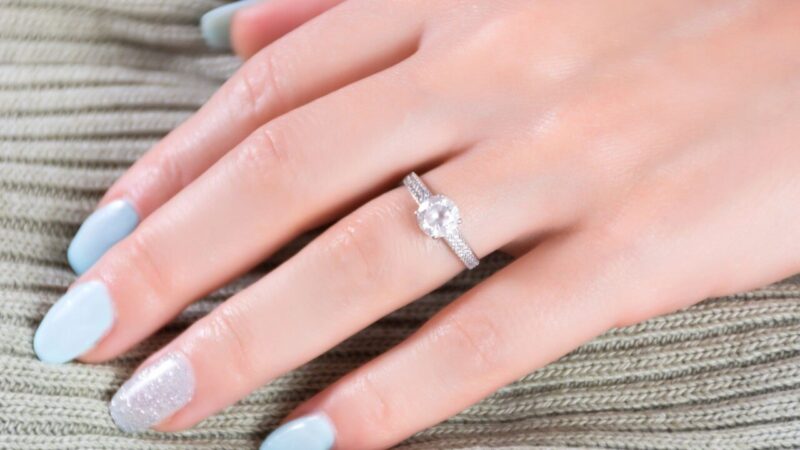
Wedding rings have one of those origin stories that sounds almost too perfect.
Romantic? Absolutely.
Accurate? Not particularly.
Every finger has veins carrying blood back toward the heart. Blood vessels in each finger connect with larger veins in the hand and arm, so your ring finger does not have a private express lane to your chest.
Yet people have repeated the story for centuries, and wedding rings have stayed firmly attached to the symbolism surrounding that finger.
Maybe that is actually more interesting than the anatomy.
In this article
There Is No Special Vein
View this post on Instagram
Human circulation gives every finger roughly the same treatment.
Arteries carry blood away from the heart, while veins bring it back. All five fingers on both hands participate in that system.
Blood leaving the fingers travels through networks of smaller veins that connect with larger vessels in the hand and arm. Those vessels eventually connect with veins such as the cephalic vein as blood makes its way back toward the heart.
Nothing about the fourth finger creates a direct anatomical connection that its neighbors lack.
Put another way, your index finger, pinky, and thumb are just as capable of sending blood back toward your heart.
Poor ring finger. Centuries of romantic publicity, and medically it is just another employee in the circulation department.
Claims about a special heart vein probably survived partly because they are wonderfully easy to remember.
“We chose this finger because several interconnected veins eventually carry blood toward the heart” would have made a considerably worse wedding speech.
“Vein of love” does the job in two words.
History Is More Tradition Than Anatomy
Trying to find one clean beginning for the ring-finger tradition quickly gets complicated.
Ancient Egypt often appears in accounts of the *vena amoris*. A historical discussion published in 2022 also traces the belief through Macrobius, a writer active around 395 to 423 AD, who described an assumed connection between the fourth finger and the heart.
Such ideas helped create an appealing historical narrative. People supposedly discovered a special physical link to the heart, then placed wedding rings exactly where biology intended.
The problem is, evidence does not show clearly that belief in the *vena amoris* actually created the Western wedding-ring custom.
Other explanations competed with it.
One account published in 1924 suggested something much less poetic. Fourth fingers may have been chosen because people used them less than their other fingers, making them convenient places for rings.
Christian wedding customs offer another possible explanation. In Anglican ceremonies, a priest touched the first three fingers while invoking the Father, Son, and Holy Ghost, then placed the ring on the fourth.
Several customs, explanations, and later stories appear to have piled onto one another.
Anyone hoping for one dramatic moment when humanity collectively discovered its designated romance finger is likely to be disappointed.
Traditions rarely organize their paperwork that neatly.
People Cannot Even Agree on Which Hand

Anatomy would make a surprisingly poor explanation for ring placement for one very obvious reason.
Countries cannot agree on the hand.
| Left Hand | Right Hand |
| United States | Germany |
| United Kingdom | Austria |
| France | Serbia |
| Canada | Greece |
| Mexico | Poland |
| South Africa | Norway |
| Australia | Russia |
| New Zealand | Denmark |
| Ireland | Spain |
| Italy | Portugal |
| Belgium | India |
| Switzerland | Bulgaria |
Orthodox Christian wedding traditions generally favor the right hand. Jewish ceremonies may initially place a wedding ring on the right index finger, even if it is worn somewhere else afterward.
Historical practice has been even less consistent.
Between the 11th and 15th centuries in France, wedding rings could appear on the right hand and sometimes on the middle finger. England even had a period when wedding rings could be worn on the thumb.
So much for anatomical destiny, right?
If one particular finger really had exclusive access to the heart, someone probably would have standardized the arrangement by now.
Instead, ring placement has depended heavily on culture, religion, geography, and time period.
So Why Keep Wearing It There?
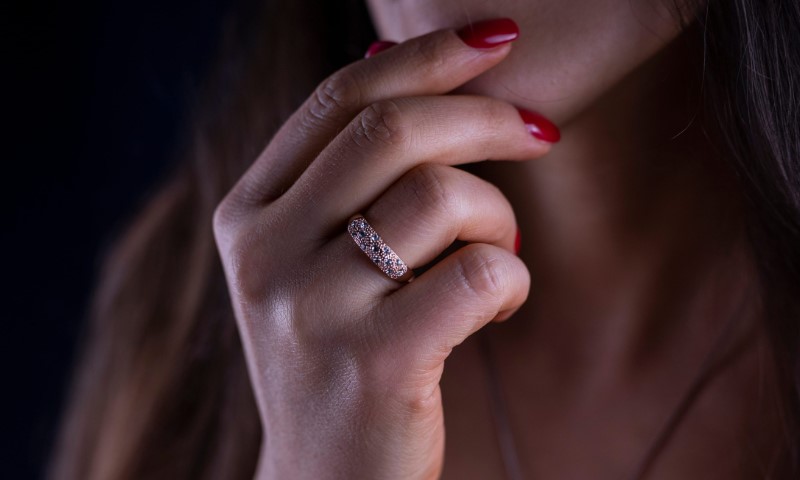
Because symbols do not need medical accuracy.
A heart-shaped Valentine does not look much like a human heart either. Nobody opens a box of chocolates and complains about anatomical standards.
*Vena amoris* worked because it turned an abstract idea into something physical.
Ring. Finger. Heart. Love.
Four simple pieces fit neatly together, even if one of them was based on bad anatomy.
Wedding rings eventually gained meaning through repetition. Generations treated a ring worn in a familiar place as a sign of commitment, marriage, and partnership. Shared convention did most of the work.
Compared with several neighboring fingers, it has relatively limited independent movement.
A ring placed there can interfere less with ordinary hand use, which is considerably less romantic than a vein leading directly to the heart but rather more useful while opening a jar.
Someone can wear a ring on the left hand because that is standard in their country. Someone else can wear it on the right because of religious or family tradition.
A left-handed person might choose whichever side feels less irritating during daily tasks.
Meaning does not vanish just because the location changes.
Something becomes symbolic when people collectively decide that it carries meaning. Scientific accuracy was never a requirement.
Keep the Ring There Anyway
No hidden love vein sits beneath your wedding ring.
Instead, there are ordinary blood vessels doing ordinary biological work, much like those in every other finger.
Around them, people built something considerably less measurable.
Centuries of customs, ceremonies, stories, religious practices, family habits, and romantic ideas turned one finger into a cultural signal. Anatomy did not need to cooperate.
Knowing that the *vena amoris* is imaginary does not make a wedding ring meaningless. If anything, reality gives the tradition a more interesting explanation.
People did not discover a finger naturally designed for love.
They decided one should represent it.
So no, your ring finger does not have a private route to the heart.
Keep the ring there anyway.