
Your turkey is still icy in the middle. A plastic temperature indicator has popped suspiciously early. Nobody can locate the gravy packet. Dinner is scheduled for 2 p.m., relatives are already asking when they should arrive, and an internet search has supplied twelve answers that somehow disagree with one another.
Another option exists. You can call somebody whose job is to think about turkey problems.
Apparently, none of that has eliminated the value of asking a person, “Why does my turkey look like that?”
In this article
Yes, There Really Is a Turkey Hotline
Calling 1-800-BUTTERBALL sounds slightly like something invented for a Thanksgiving sitcom.
It is a real number: 1-800-288-8372.
Butterball created its Turkey Talk-Line in 1981, initially putting six home economists on the phones to answer approximately 11,000 questions. Today, more than 50 experts answer over 100,000 questions during the holiday season for cooks across the United States and Canada.
Phone calls are only part of it now. Cooks can also text 844-877-3456 or use online live chat.
Such expansion makes sense because turkey anxiety has never depended much on technology.
Recipes are everywhere. Videos can show you exactly how somebody else roasted a 14-pound bird in somebody else’s oven. Search results can explain safe temperatures, thawing schedules, brining ratios, and stuffing techniques.
None of those resources can look at your particular problem and ask what happened five minutes earlier.
Thanksgiving also has an unusual way of making ordinary uncertainty feel important. Cooking chicken on a Tuesday night gives you some room for error.
Cooking a large turkey for a table full of relatives who have mentally scheduled their mashed potatoes around it feels slightly different.
Apparently, “Have you tried turning it over?” works as technical support even when the device weighs 21 pounds and has been rubbed with poultry seasoning.
Questions Start Normal. They Do Not Always Stay That Way.
Most Turkey Talk-Line conversations begin with perfectly sensible questions.
Thawing is one of the biggest concerns. People discover that a bird has not defrosted as quickly as expected, then need to figure out what can safely be done before dinner.
Other calls concern internal temperature, missing giblets, stuffing, brining, seasoning, cooking schedules, or pop-up temperature indicators that appear to be doing something strange. Anyone who has cooked a whole turkey can see why.
A turkey is large enough that small misunderstandings become inconvenient. Something hidden inside the cavity can look mysterious. Cooking time varies with size and preparation.
One thermometer reading may not tell the whole story if it was taken in the wrong spot.
Then there are the calls that probably make working Thanksgiving more interesting.
People have reportedly asked if an electric blanket could thaw a turkey faster. A hot tub has also been proposed. Neither is a good plan. Food safety eventually places limits on improvisation, even when dinner is several hours behind schedule.
Another memorable call concerned a group convinced that their 21-pound turkey somehow contained no meat. After some questioning, an expert worked out what had happened. They had roasted it upside down.
Interesting Fact: USDA food-safety research says 66% of people do not use food thermometers correctly.
A Real Person Is Answering
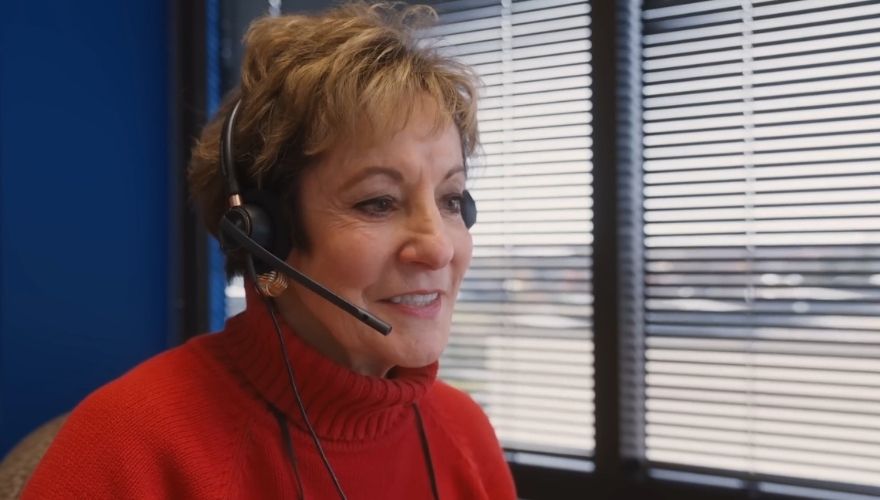
Calling a food hotline might sound like contacting a customer-service center where someone reads instructions off a screen.
Butterball uses people with serious food knowledge instead. Talk-Line staffers have included chefs, nutritionists, professors, food scientists, researchers, and other food professionals. Experts also train through Butterball University, where they work with multiple cooking methods in a test kitchen and receive training for phone and media conversations.
Longtime Talk-Line expert Phyllis Kramer brought another kind of experience. Before joining Butterball, she taught high school home economics for 38 years.
That background matters because turkey questions rarely arrive as tidy textbook problems.
“My turkey isn’t done” sounds simple until somebody needs to know its weight, how it was thawed, which cooking method is being used, what temperature the oven is set to, where the thermometer was placed, and how soon everybody expects to eat.
Context changes the answer.
Kramer has also described callers asking if she is a recording. Finding out that an actual person is listening can produce genuine relief. Something interesting is happening there.
People already have access to more cooking information than any previous generation could have imagined. Almost every standard turkey question has been answered online countless times.
Access to information, though, is not quite the same as help.
A search result gives instructions. A person can hear the problem, notice what is missing, ask another question, and adjust the advice.
That small distinction helps explain why a telephone service created in 1981 still makes sense in 2026.
Call Before You Start Improvising
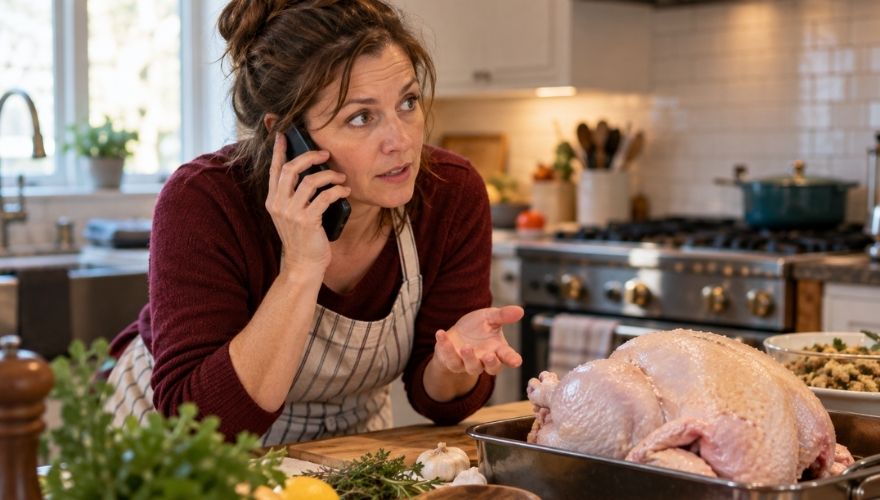
Plenty of turkey questions do not require emergency intervention.
Others are worth asking before an improvised solution creates a second problem.
A bird that has not thawed on schedule is a good reason to contact the Talk-Line. So is uncertainty about safe internal temperature, stuffing, brining, roasting, or cooking time.
Odd behavior involving a thermometer or pop-up indicator also deserves a question.
Anything unfamiliar inside the cavity is another reasonable excuse to ask somebody who has seen a lot more turkeys than you probably have.
Calling becomes especially sensible once you catch yourself inventing a workaround.
Maybe dinner is late, and you want to speed things up. Maybe something was cooked incorrectly, and you are considering another unconventional method to fix it. Maybe the turkey has already had an encounter with the kitchen floor.
At that point, asking a professional is usually preferable to seeing what happens next.
Seasonal help operates during November and December. Butterball’s 2026 information says the Talk-Line opens November 3.
Exact Thanksgiving Day hours can change, so checking current hours shortly before the holiday is sensible.
Saving the phone number earlier is also easier than trying to locate it with raw turkey juice on your hands.
Why a Phone Call Still Makes Sense in 2026
Modern kitchens have no shortage of information.
Search engines can produce thousands of turkey recipes. Video platforms can demonstrate carving techniques. Social media can offer varying opinions before you have finished typing the question.
Smart thermometers can send temperature readings straight to a phone.
Yet Thanksgiving may be one of those moments when additional information stops being especially useful.
Picture the actual problem.
Your turkey is half frozen. Guests are arriving soon. One recipe assumes a 12-pound bird, another discusses 18 pounds, somebody on a forum insists on a method you have never heard of, and a video presenter appears to have started preparations yesterday.
Nobody in that situation particularly wants more tabs open.
What you probably want is one competent person to hear what happened and say what to do next.