
You order a Pumpkin Spice Latte because it tastes like fall, or at least like the version of fall involving sweaters, cinnamon, and leaves that have behaved themselves for Instagram.
Actual pumpkin has always seemed almost beside the point. For a surprisingly long time, Starbucks seemed to agree. When the Pumpkin Spice Latte debuted in 2003, it contained no real pumpkin.
Espresso, steamed milk, sweetness, and warm pie spices did all the work. Twelve autumns later, Starbucks changed the recipe and added pumpkin puree.
So yes, there really is pumpkin in your Pumpkin Spice Latte now. More interestingly, one of America’s most successful seasonal drinks only needed real pumpkin after people began asking what, exactly, was inside the cup.
In this article
A Pumpkin Drink That Did Just Fine Without Pumpkin
Starbucks introduced the Pumpkin Spice Latte in 2003, first testing it in roughly 100 stores in Vancouver and Washington, D.C. It quickly expanded and, by 2015, Starbucks was calling it its most popular seasonal beverage.
View this post on Instagram
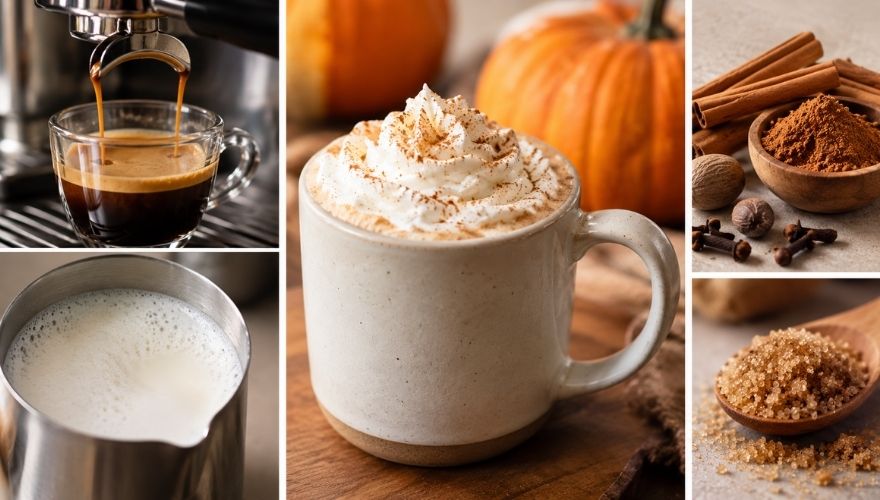
Its original trick was simple. Rather than tasting strongly of squash, it recreated the idea of pumpkin pie through:
- Espresso
- Steamed milk
- Sweetness
- Familiar autumn spices
Cinnamon, ginger, nutmeg, and clove were already doing most of the cultural work associated with pumpkin desserts. Apparently, pumpkin can outsource quite a lot of its job to cinnamon.
Popularity only made that contradiction more entertaining. For more than a decade, a drink that helped make pumpkin spice a national seasonal obsession contained no pumpkin at all.
Nobody seemed terribly bothered at first.
Customers were not lining up because they had developed a sudden passion for pureed squash. They wanted the smell, sweetness, warmth, and yearly ritual attached to the name.
Success spread well outside Starbucks. Competing coffee drinks appeared. Pumpkin-spice snacks multiplied. Candles, cereals, creamers, cookies, and assorted objects that had no obvious business tasting like pie joined the annual rush.
By 2015, U.S. supermarket and convenience-store sales of pumpkin-flavored food, personal-care products, and household goods had climbed past $360 million, nearly 80% higher than in 2011.
At that point, pumpkin spice was less a coffee flavor than a retail season with cinnamon on top.
Then People Started Reading the Ingredient List
Something changed around 2014 and 2015. Ingredient lists had become part of the food conversation in a way they had not always been, and the PSL became an easy target.
Consumer attention was measurable, too. In a 2015 survey of 1,007 American adults, 46 percent said they had considered preservatives when buying packaged food or drinks, while 26 percent had considered food colors. A latte suddenly becoming a debate about caramel coloring makes considerably more sense in that context.
Criticism also focused on sugar, which was hardly a hidden feature of a sweet seasonal latte, but the missing pumpkin made for the cleaner headline. A product with “pumpkin” in its name contained none. Suddenly, a fact that had been true for years looked like a problem.
Starbucks said it had heard questions and feedback about ingredients and decided to reconsider the recipe. Its 2015 reformulation added pumpkin puree and removed caramel coloring. Timing mattered. Major food companies were also reconsidering artificial ingredients, colors, and other formulations as shoppers paid closer attention to labels.
Calls for recognizable ingredients were becoming part of mainstream food culture rather than a niche concern. None of that means the earlier PSL was pretending to be a cup of vegetables.
Pumpkin spice has long referred to the spice profile associated with pumpkin pie, not a promise that every product carrying the phrase contains pumpkin flesh.
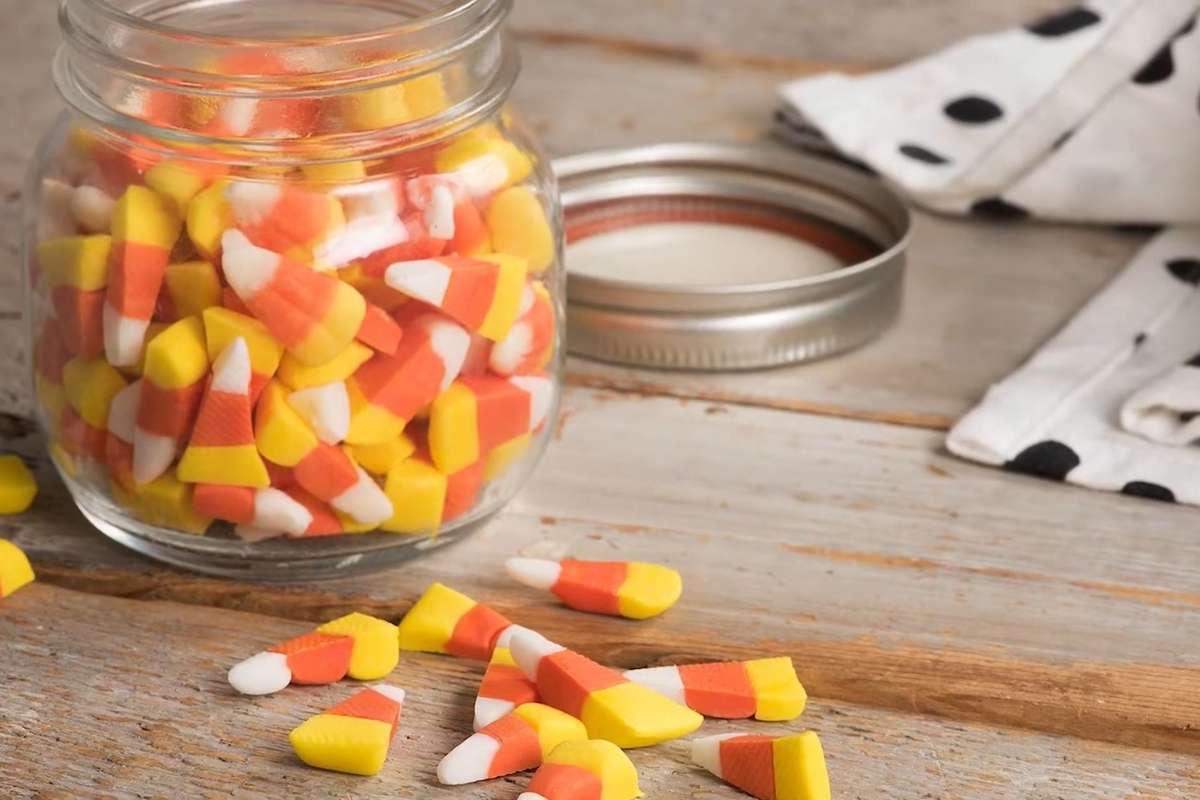
The same idea applies to candy corn, where the name and appearance create expectations long before anyone thinks about what is actually inside.
Still, names create expectations. Once shoppers started comparing labels with the words printed on menus, “pumpkin” without pumpkin became harder to ignore.
Funny how an ingredient can be unnecessary for 12 years and then become overdue almost overnight.
So What Does “Real Pumpkin” Mean in a PSL?
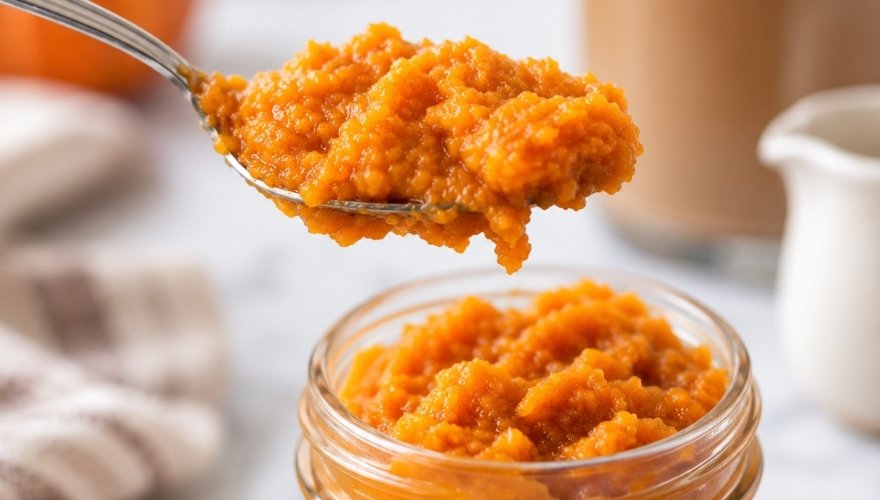
Starbucks added pumpkin puree to its pumpkin-spice-flavored sauce in 2015. Real pumpkin has been part of the recipe ever since. Pumpkin is not the main substance in the drink. Its sauce also contains sugar and condensed skim milk, along with coloring made with fruit and vegetable juice, annatto, flavoring, preservative, and salt.
Reports on the current formulation identify kabocha pumpkin as the type used in the puree. Once prepared, that sauce joins espresso and steamed milk, with whipped cream and pumpkin pie spices finishing the drink. Cinnamon, ginger, nutmeg, and clove still do plenty of work in creating the familiar PSL flavor.
Starbucks kept real pumpkin in the recipe through 2025, and its 2026 marketing still explicitly describes the drink as made with real pumpkin. So there is pumpkin in your Pumpkin Spice Latte.
There is not, to be clear, a tiny Thanksgiving pie dissolving at the bottom of the cup. That distinction matters because “made with real pumpkin” can sound more dramatic than the recipe change actually was. Pumpkin became one ingredient in a flavored sauce, not the new center of the beverage.
Adding Pumpkin Was Supposed to Change Almost Nothing
Reformulating a beloved product creates an odd problem. Customers ask for change, then often become annoyed if they can taste it.
Starbucks had to satisfy new expectations around ingredients while protecting the exact familiarity that made the PSL valuable. Company messaging around the 2015 update stressed continuity in flavor.
That made pumpkin useful in a surprisingly quiet way. Adding puree made the ingredient list easier to explain. It made the product name easier to read literally. It gave Starbucks a cleaner answer when someone asked, “Does this actually contain pumpkin?” Taste, though, still depended heavily on sugar, milk, espresso, and warm spices.
In practical terms, customers had asked for a meaningful ingredient change that worked best if it barely announced itself in the cup. Ideal reformulation, then, meant something people could approve of on the label without necessarily identifying on the first sip.
Pumpkin may have mattered less to the drink’s original success than it later mattered to the story Starbucks could tell about what was inside it.
That is a small distinction, but a revealing one. Food choices are rarely just chemistry. Names, expectations, labels, and cultural timing can change how an ingredient feels long before they change how strongly we taste it.
Nostalgia May Be the More Important Ingredient
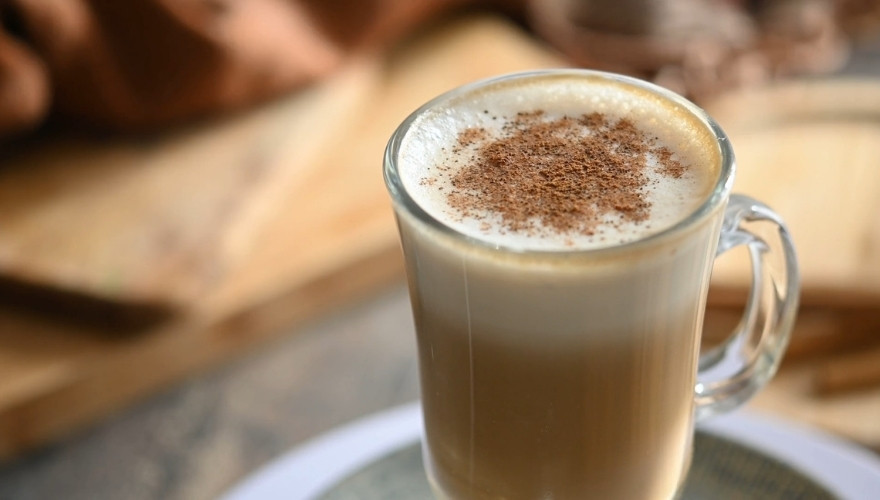
By now, a Pumpkin Spice Latte is not merely a flavored coffee. Its annual return works like a seasonal announcement. August can still be hot. Air conditioners can still be working overtime.
Nobody nearby may need a sweater. Yet once pumpkin spice appears on a menu, autumn has apparently filed the paperwork.
Starbucks still markets the PSL as a fall ritual in 2026, which makes sense. Seasonal products gain power partly because they disappear. Scarcity turns a familiar drink into an event.
Routine does the rest. Someone orders one on the first cool morning of the year, another person buys one every September with a coworker, and eventually flavor gets tied to memory.
Pumpkin spice is particularly good at that trick because its aroma is so recognizable. Consumers kept putting money behind the ritual. By 2019, pumpkin-flavored grocery products were generating $511 million in annual U.S. sales, 4.7% more than a year earlier. Cinnamon, nutmeg, and the idea of September had become a surprisingly serious business.
Real pumpkin now gives the drink a more literal link to its name, but puree alone does not explain why people care.
Food often reaches us through association before analysis. A smell can feel seasonal before we identify its ingredients. A limited-time menu can create anticipation before we decide how much we actually like the drink.
Yes, the Pumpkin Is Real. Autumn Is Mostly Marketing
Starbucks’ Pumpkin Spice Latte has contained real pumpkin since 2015. For its first 12 years, it did not need any. That may be the more revealing fact. Popularity came first.
Pumpkin came later, after shoppers started paying closer attention to ingredient lists and asking companies to make familiar product names line up more neatly with familiar ingredients.
So next time someone points out that your Pumpkin Spice Latte contains actual pumpkin, you can assure them that it does.