
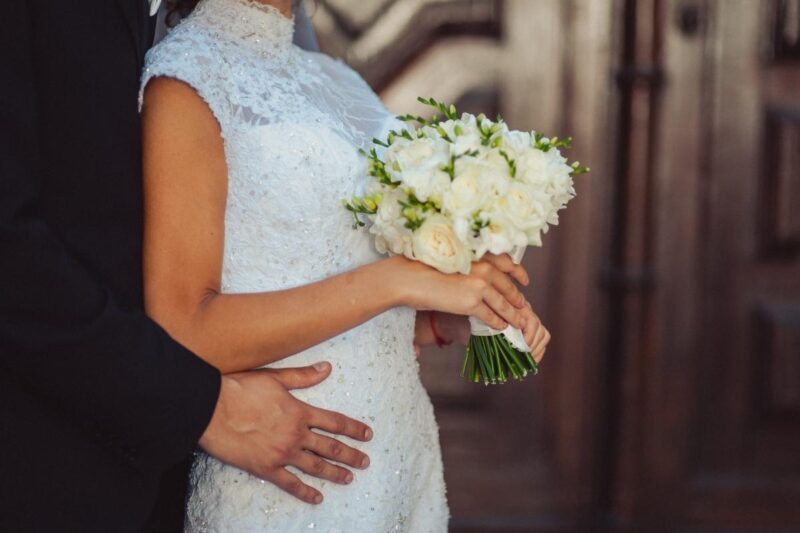
Walk into a bridal boutique, and you might spend an afternoon deciding between two dresses that look almost identical until someone holds them against a window.
Yet hardly anyone questions the bigger decision. Why do brides wear white in the first place?
Ask around, and you’ll probably hear one of two explanations. White symbolizes purity, or Queen Victoria started the tradition in 1840.
Neither answer tells the whole story.
Brides wore white centuries before Victoria walked down the aisle. Her wedding simply gave the color something it hadn’t enjoyed before: enormous publicity.
Fashion, money, social expectations, and eventually an entire wedding industry took care of the rest.
In this article
Before White, Brides Simply Wore Their Best Dress
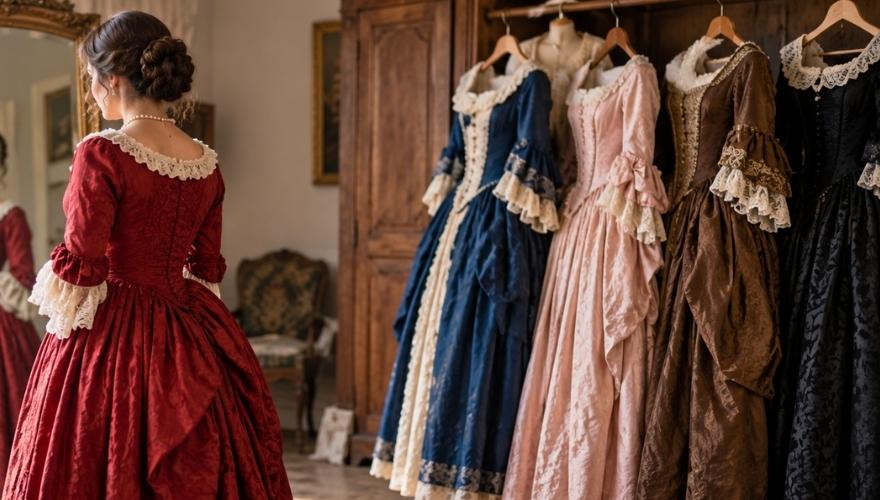
Imagine telling an 18th-century bride she needed an expensive gown she’d wear once, carefully preserve, and possibly never touch again.
She might wonder what was wrong with the perfectly good dresses already in her wardrobe. Before the 19th century, Western brides regularly married in red, blue, pink, brown, and even black.
Color mattered considerably less than the quality of the clothing.
For ordinary women, a wedding usually meant wearing their best available dress, sometimes specially made but intended for future occasions.
Expensive fabrics were valuable possessions. Buying a gown for one afternoon wasn’t particularly sensible when the same money could pay for clothing used over several years.
Wealthier families approached things differently.
Silk, elaborate embroidery, fine lace, and fashionable tailoring communicated financial status. A bride’s clothing could reveal her family’s position long before anyone exchanged vows.
According to the Victoria and Albert Museum’s historical wedding dress collection, fabric frequently represented the largest expense of an 18th-century gown. Wedding dresses could also be worn again or dyed another color.
Even when a bride commissioned something special, she wasn’t necessarily purchasing a disposable outfit.
Queen Victoria Made White Fashionable, but She Wasn’t First
One persistent misconception deserves correcting: Queen Victoria did not invent the white wedding dress.
Philippa of England reportedly wore white satin when she married Eric of Pomerania in 1406. Mary, Queen of Scots, also wore white for her 1558 marriage to Francis, the French dauphin.
Both weddings happened long before Victoria’s birth.
Yet neither established white as the expected bridal color across Western society. Victoria had something those earlier brides lacked: a rapidly expanding media culture capable of turning royal fashion into a widely copied trend.
On February 10, 1840, she married Prince Albert at the Chapel Royal in St. James’s Palace, London.
Her outfit was carefully considered.
Rather than wearing the traditional crimson velvet robes associated with royal ceremony, Victoria selected a cream-white silk satin gown decorated with Honiton lace.
Spitalfields silk supported English textile manufacturing, while her choice of Honiton lace helped promote the struggling lace-making industry in Devon.
And this wasn’t a small commission. Historical accounts suggest that approximately 200 women spent months producing the lace for Victoria’s wedding ensemble. One royal fashion decision had effectively become a major employment project for Devon’s lace makers.
For a closer look at the gown that helped shape modern bridal fashion, Past People explores Queen Victoria’s wedding dress, its design, and its place in royal fashion history in this interesting documentary.
Her appearance also carried a romantic message. Orange blossoms decorated her outfit, and a floral wreath replaced the elaborate royal crown or diadem that observers might have expected.
She wanted to appear as Albert’s bride, not simply Britain’s monarch.
Newspapers, engravings, and fashionable society publications spread descriptions and images of the wedding.
Suddenly, women who had never met Victoria could imitate her appearance. Even today, searches for the real Queen Victoria wedding dress reveal an important detail.
Her gown was cream-colored silk satin, rather than the brilliant optical white commonly seen in modern bridal collections.
Victoria didn’t create the fashion. She made it famous.
White Was About Wealth as Much as Purity
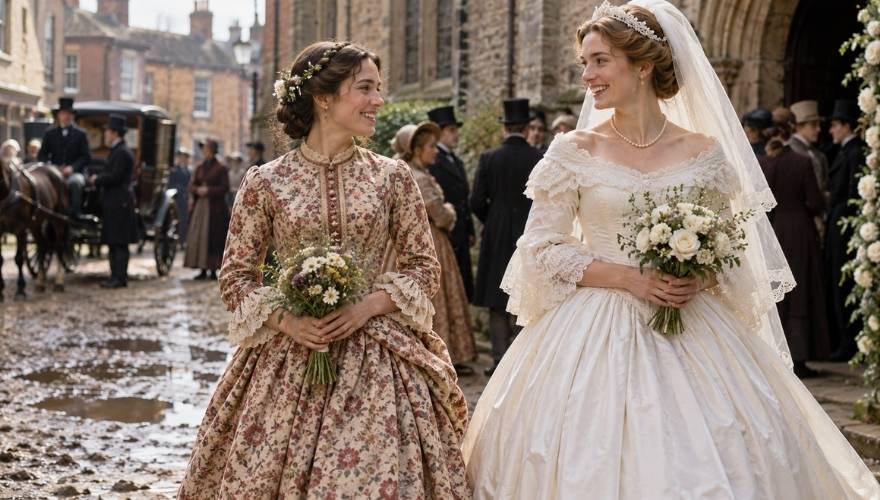
White wedding dresses eventually became associated with innocence, virtue, and Victorian expectations of respectable femininity.
But there’s another explanation hiding in plain sight. White clothing was expensive to maintain.
Imagine wearing a long white skirt through a muddy 19th-century street, especially before modern washing machines, stain removers, and convenient dry-cleaning services. Even a beautiful dress could become a laundry problem almost immediately. For wealthy families, that inconvenience was part of the message.
An elaborate white gown suggested access to expensive fabrics, skilled dressmakers, and enough resources to maintain delicate clothing.
Someone who could afford an impractical dress was making a statement about money as well as marriage.
Consider two brides in the 1840s.
One could afford a fashionable white gown and the care needed to preserve it. Another needed a dress suitable for church, family gatherings, and future celebrations.
Both could marry respectably, but only one could easily imitate the queen.
A surviving example makes that distinction particularly clear.
In 1841, just one year after Victoria’s wedding, Sarah Maria Wright married agricultural laborer Daniel Neal in Skirbeck, England, wearing a patterned dress.
Her gown, preserved by the Victoria and Albert Museum, shows that ordinary brides continued making practical clothing decisions despite the growing popularity of white.
Purity wasn’t an invented explanation, but neither was it the sole reason white became fashionable.
Social symbolism and financial status developed alongside each other.
So Why Do Brides Still Wear White?
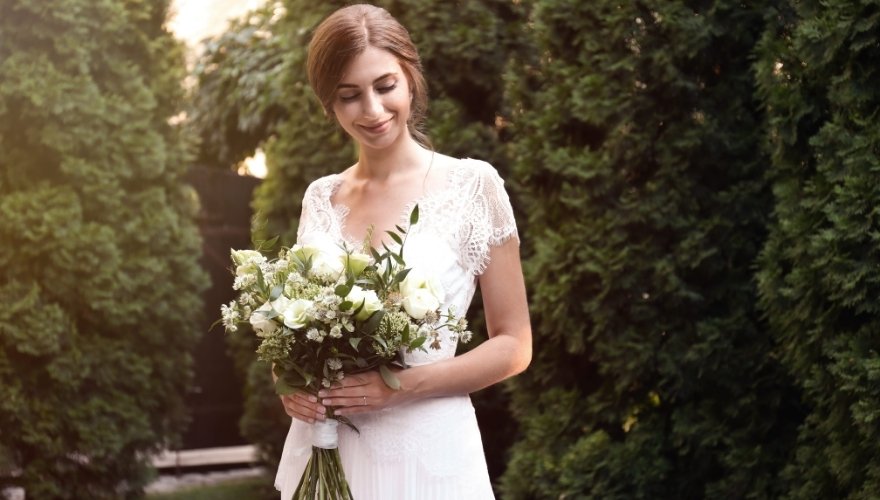
Modern brides aren’t necessarily thinking about Victorian morality when they choose a white gown.
Many simply love the look.
According to The Knot’s bridal survey data, 96% of brides chose white attire in 2015, compared with 83% in 2022.
That’s a 13-percentage-point drop in just seven years. White still dominates, but more brides are apparently comfortable giving tradition a little competition.
Others associate white with romance, family photographs, childhood expectations, or the excitement of wearing something completely different on their wedding day.
And even the color itself is more flexible than people might assume.
Consider the familiar ivory vs. white wedding dress debate. Bright white generally has a cooler, cleaner appearance, while ivory carries warmer cream undertones. Neither shade has a separate historical rule that determines which bride should wear it.
Champagne, blush, and other subtle variations further complicate the idea that traditional bridal clothing must be one precise color.
Of course, not every bride chooses white.
Red, black, gold, and colorful embroidered gowns are all possibilities, particularly when personal preferences or cultural wedding customs call for something different. White is primarily a Western bridal convention, not a universal requirement.
Fashion history offers other examples of styles becoming timeless classics, including the little black dress.
So, why are wedding dresses white after all these years?
A Trend That Became a Tradition
Queen Victoria probably wouldn’t recognize every part of a modern wedding. Bridal appointments, elaborate gown alterations, and debates about ivory versus champagne might strike her as rather excessive.
But she’d recognize the dress.
Her 1840 wedding helped turn white bridal fashion into an aspiration. Wealth made it desirable, changing manufacturing practices made it more accessible, and commercial promotion helped establish it as the familiar choice.
Centuries of repetition did something even more powerful. They made a fashion preference feel like an ancient rule.
And Victoria might be surprised by how many people still think she invented it.