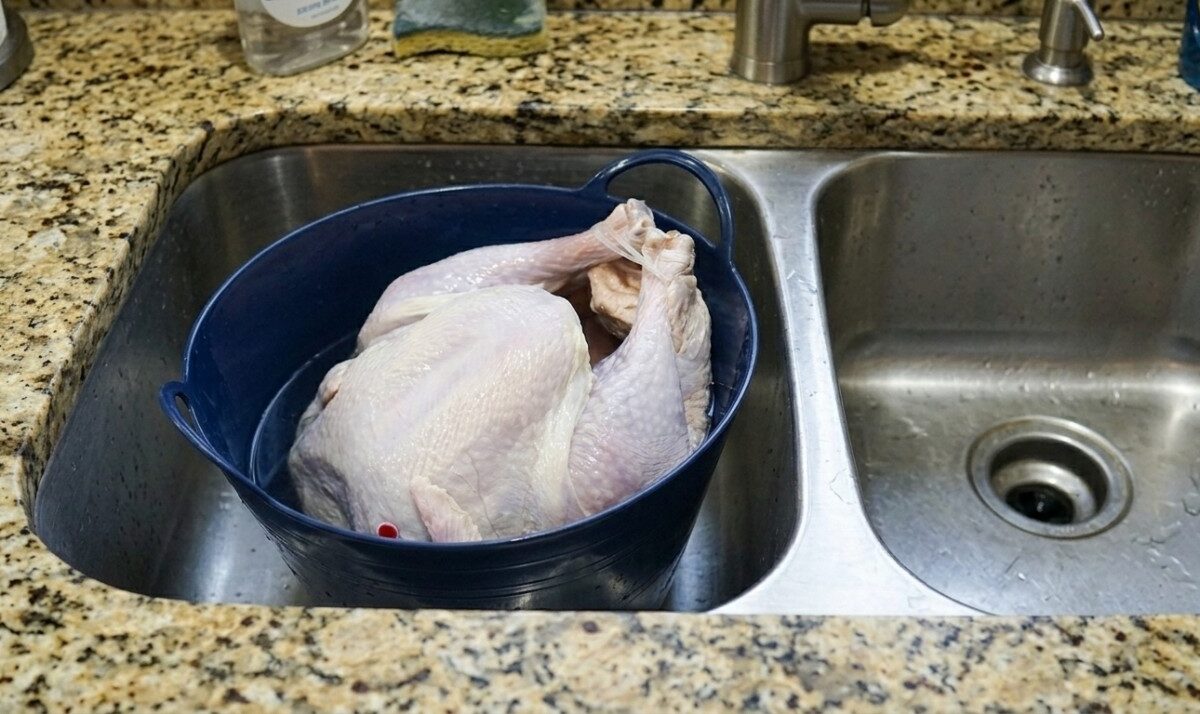

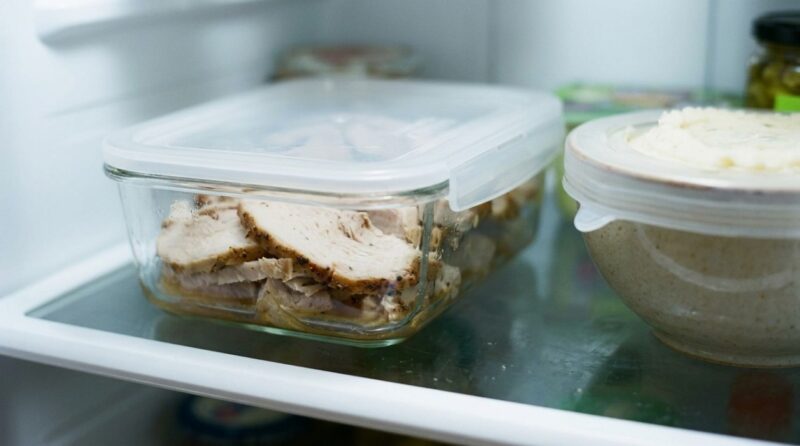
By Sunday, Thanksgiving turkey has probably appeared in a few sandwiches, maybe a soup, and at least one container pushed to the back of the fridge.
It still looks perfectly fine, but that doesn’t necessarily mean it’s good for another few days.
Leftover turkey has a shorter shelf life than many people realize.
Cooked turkey lasts 3 to 4 days in the refrigerator when stored properly, which makes Monday the deadline for turkey prepared on Thanksgiving Thursday.
After that, even a perfectly ordinary-looking slice of turkey can become a food safety risk.
Fortunately, a little planning can keep those leftovers edible without requiring turkey sandwiches at every meal.
In this article
How Long Does Cooked Turkey Last in the Fridge?
Cooked turkey can safely stay in the refrigerator for 3 to 4 days, provided it was refrigerated promptly and kept at 40°F (4°C) or below.
USDA food safety guidelines recommend the same storage period for cooked poultry and dishes containing turkey, including casseroles, soups, and stuffing prepared with cooked meat.
Refrigeration slows bacterial growth, but it doesn’t stop it completely. Temperatures between 40°F and 140°F are considered the food safety danger zone, where bacteria can multiply rapidly.
Under favorable conditions, some bacteria can double in number in as little as 20 minutes. That makes the familiar Thanksgiving habit of leaving food out for hours considerably less harmless than it looks.
A warm kitchen and a crowded dinner table aren’t particularly good conditions for preserving leftovers.
For Thanksgiving leftovers, the calendar makes the deadline easy to remember:
| Day | Turkey Storage Timeline |
| Thursday | Thanksgiving turkey is cooked and refrigerated |
| Friday | Day 1 |
| Saturday | Day 2 |
| Sunday | Day 3 |
| Monday | Day 4, the final recommended day |
| Tuesday | Discard refrigerated leftovers |
Storage time starts when the turkey is prepared, not when someone finally transfers it into a proper container.
One important exception involves food left sitting on the table. Turkey kept at room temperature for more than two hours should be discarded, even if Thanksgiving dinner ended only a few hours earlier.
At temperatures above 90°F, that limit drops to one hour.
How to Store Leftover Turkey Properly
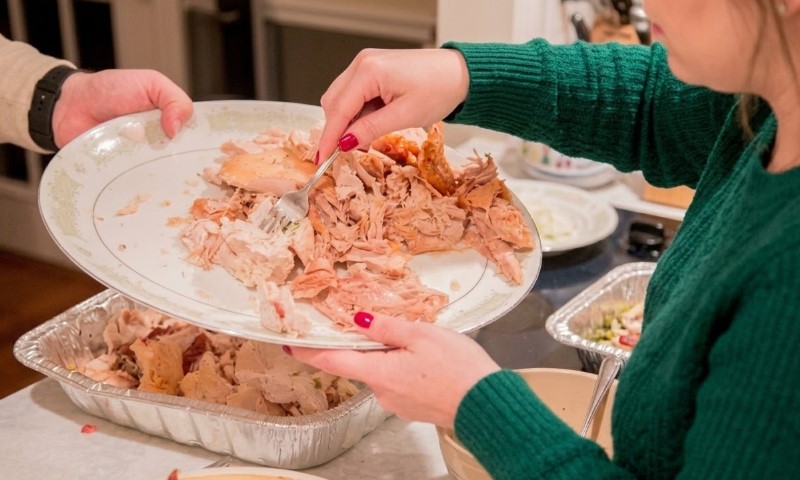
Putting the entire Thanksgiving turkey into the refrigerator might seem convenient, but it’s not particularly effective.
Large pieces of meat cool slowly, especially around the bones. Bacteria can multiply while the interior gradually reaches a safe refrigerator temperature.
One bacterium worth knowing about is Clostridium perfringens, which is associated with large batches of meat and gravy held at unsafe temperatures.
A CDC study published in 2025 estimated that it caused approximately 889,000 foodborne illnesses annually in the United States, based on 2019 data. Suddenly, dividing Thanksgiving leftovers into smaller containers seems like a fairly reasonable precaution.
Cornell University food scientist Abigail Snyder recommends slicing turkey or dividing it into smaller portions to encourage faster, more even cooling.
A practical storage routine looks like this:
| Step | Storage Method | Why It Matters |
| 1 | Remove meat from the carcass | Separate breast meat, thighs, and other portions instead of storing the whole bird. |
| 2 | Use shallow containers | Smaller portions cool faster and more evenly. |
| 3 | Seal everything properly | Airtight containers or sealed bags prevent moisture loss and contamination. |
| 4 | Label each container | Mark the preparation date to track freshness and storage time. |
| 5 | Refrigerate within two hours | Store turkey promptly without waiting for it to cool completely on the counter. |
Consider a family finishing Thanksgiving dinner at 6 p.m. Instead of leaving the turkey on the table until everyone finishes dessert, someone removes the remaining meat and refrigerates it in shallow containers before 8 p.m.
That simple change reduces time spent at temperatures favorable to bacterial growth.
Avoid overcrowding the refrigerator, too. Cold air needs room to circulate, particularly when several large dishes arrive at once.
Can You Freeze Leftover Turkey?
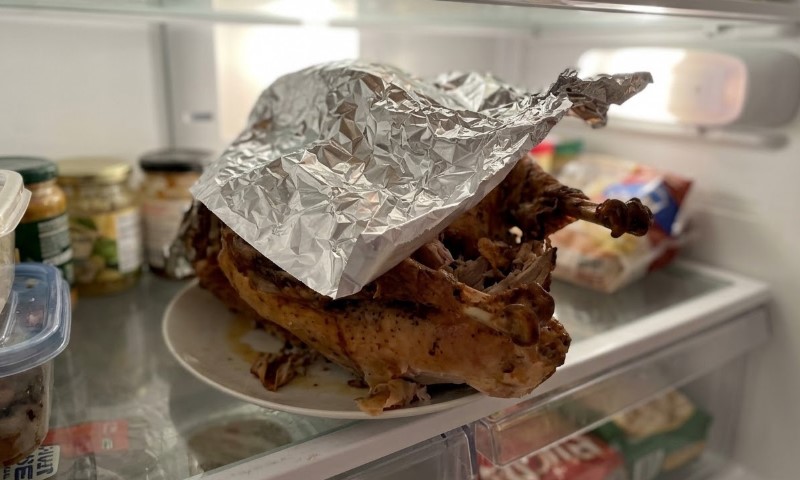
Yes, and freezing is probably the most practical answer when the refrigerator contains enough turkey to supply another Thanksgiving dinner.
Cooked turkey generally maintains its best quality for approximately 4 to 6 months in the freezer. Food safety experts recommend eating frozen leftovers within six months for optimal flavor and texture.
Freezing at 0°F (-18°C) stops microbial growth, although it doesn’t necessarily kill all bacteria already present.
Turkey kept continuously frozen at that temperature can remain safe indefinitely. Quality is another matter.
Over time, frozen turkey can develop freezer burn, which affects moisture, texture, and flavor. Meat may become dry or tough, even though freezer burn itself doesn’t make food unsafe.
For better results, divide turkey into meal-sized portions, wrap them tightly, and place them inside freezer-safe bags or airtight containers.
Remove as much excess air as possible.
Smaller portions also make future meals easier. Freezing enough turkey for two sandwiches is considerably more convenient than thawing several pounds for lunch.
One detail deserves attention: Freezing doesn’t erase the time turkey has already spent in the refrigerator.
Turkey refrigerated safely on Thursday can be frozen on Sunday or Monday, but freezing meat that has already been stored unsafely won’t make it safe again.
Whenever possible, freeze extra portions earlier rather than treating Monday as an invitation to test the limits.
How Can You Tell If Leftover Turkey Has Gone Bad?
View this post on Instagram
Sometimes spoiled turkey makes the decision easy. Other times, it looks almost exactly as it did when it first entered the refrigerator.
Common spoilage signs include:
- Unpleasant odors – Sour, rotten, or otherwise unusual smells.
- Discoloration – Dull gray or green areas that weren’t present when the turkey was freshly cooked.
- Sticky texture – A tacky surface that feels different than normal cooked meat.
- Sliminess – A slippery coating that can indicate microbial spoilage.
Any of these signs is enough reason to throw the turkey away.
Unfortunately, their absence doesn’t guarantee safety.
Harmful bacteria responsible for foodborne illness don’t always produce noticeable changes in appearance, smell, or texture.
A turkey sandwich can smell completely normal while containing dangerous levels of bacteria.
Consequently, the familiar sniff test has an important limitation. It can help identify obvious spoilage, but it cannot reliably establish food safety.
If refrigerated turkey has passed the four-day storage window, discard it regardless of how appetizing it looks.
Tasting a small piece to check its condition isn’t a safe alternative.
How to Reheat Leftover Turkey Safely
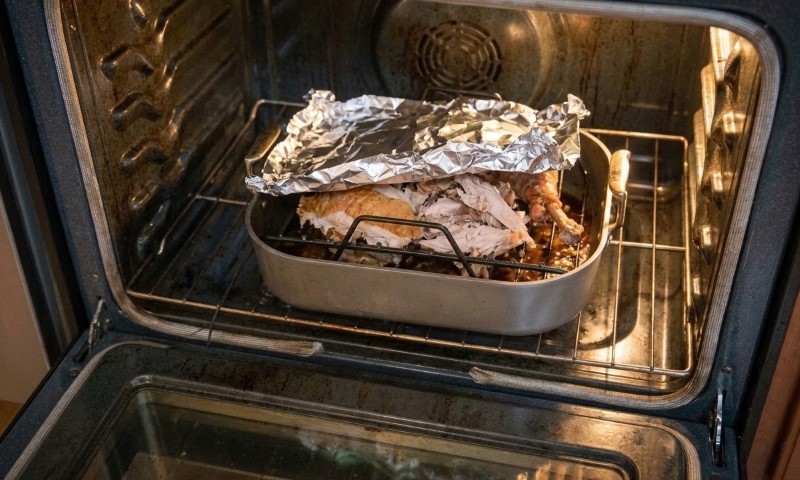
Cold turkey sandwiches have their place, but reheating leftovers properly requires more than making the meat feel warm.
USDA guidelines recommend heating leftover turkey to an internal temperature of 165°F (74°C).
A food thermometer provides the most reliable measurement. Check the thickest portion or several areas of a larger dish rather than judging the temperature by appearance.
Microwaves deserve particular attention because they can heat food unevenly, leaving cooler areas where bacteria may survive.
Cover turkey while reheating, rotate or stir it when possible, and allow sufficient standing time before checking the temperature.
For oven reheating, use a temperature of at least 325°F and cover the meat with a little broth or gravy. Added moisture helps prevent the dry, chewy texture that makes leftover turkey considerably less exciting than it was on Thanksgiving.
Reheat only the portion you plan to eat.
Repeated warming and cooling adds unnecessary handling, and reheating doesn’t restart the original refrigerator storage period.
More importantly, cooking cannot reliably correct every problem caused by improper storage. Some bacterial toxins can withstand temperatures used for ordinary reheating.
Monday Is the Time to Decide
Properly refrigerated Thanksgiving turkey has until Monday to become another meal or earn a spot in the freezer.
Anything that spent too long sitting out, wasn’t kept cold enough, or has passed its recommended storage window should be discarded.
For everyone facing an increasingly repetitive lineup of turkey sandwiches, freezing a few portions before Monday is the simplest solution.
Another turkey sandwich might not sound particularly exciting by Monday. Fortunately, the freezer doesn’t care how enthusiastic you are about leftovers.