
Figuring out what to wear to Nutcracker ballet performances is surprisingly straightforward once you stop treating the occasion like a formal event.
A beautiful theater, holiday decorations, and an evening of classical ballet certainly invite something special, but nobody needs an elaborate gown to enjoy the Sugar Plum Fairy.
A little velvet, polished tailoring, or a beautiful winter coat can do plenty of work. Comfort matters just as much, especially when you’re spending a couple of hours in your seat.
Fortunately, appropriate nutcracker attire doesn’t require sacrificing either.
In this article
1. A Velvet Midi Dress With Low Heels
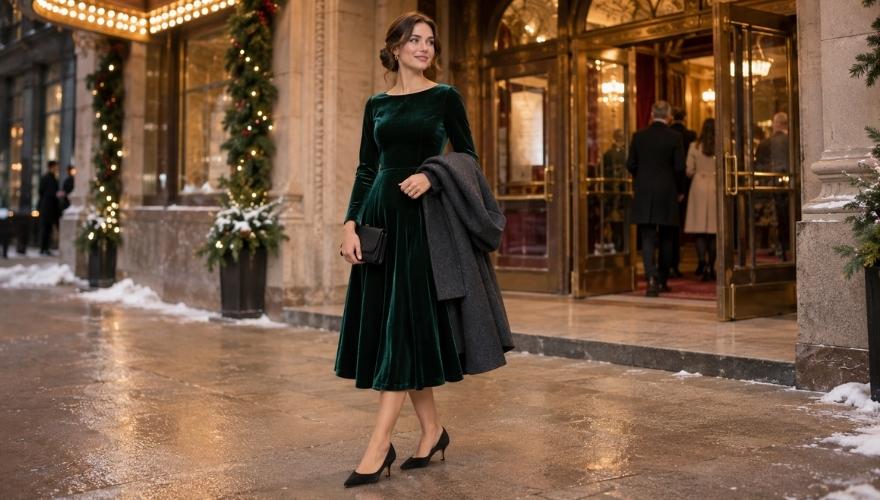
Few fabrics say holiday season quite as convincingly as velvet. Its soft texture catches the light beautifully, making even a relatively simple dress feel appropriate for an evening at the ballet.
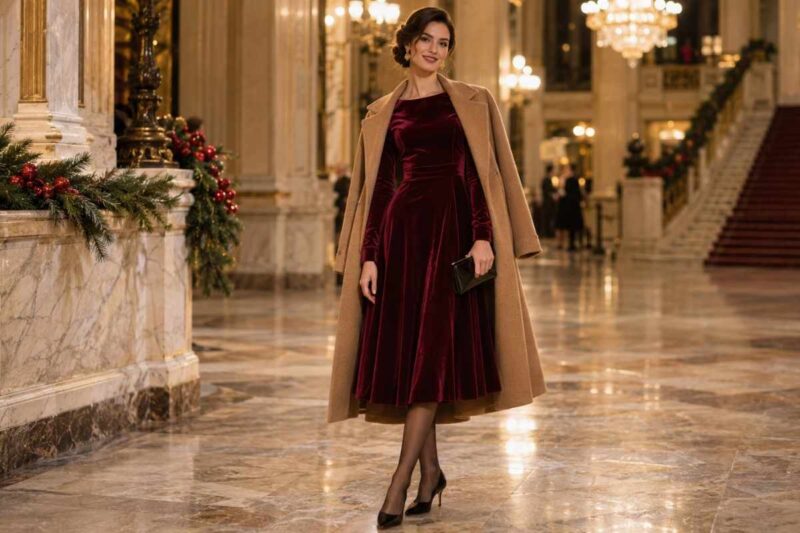
A burgundy or emerald velvet midi dress paired with kitten heels creates an elegant outfit without demanding much additional styling.
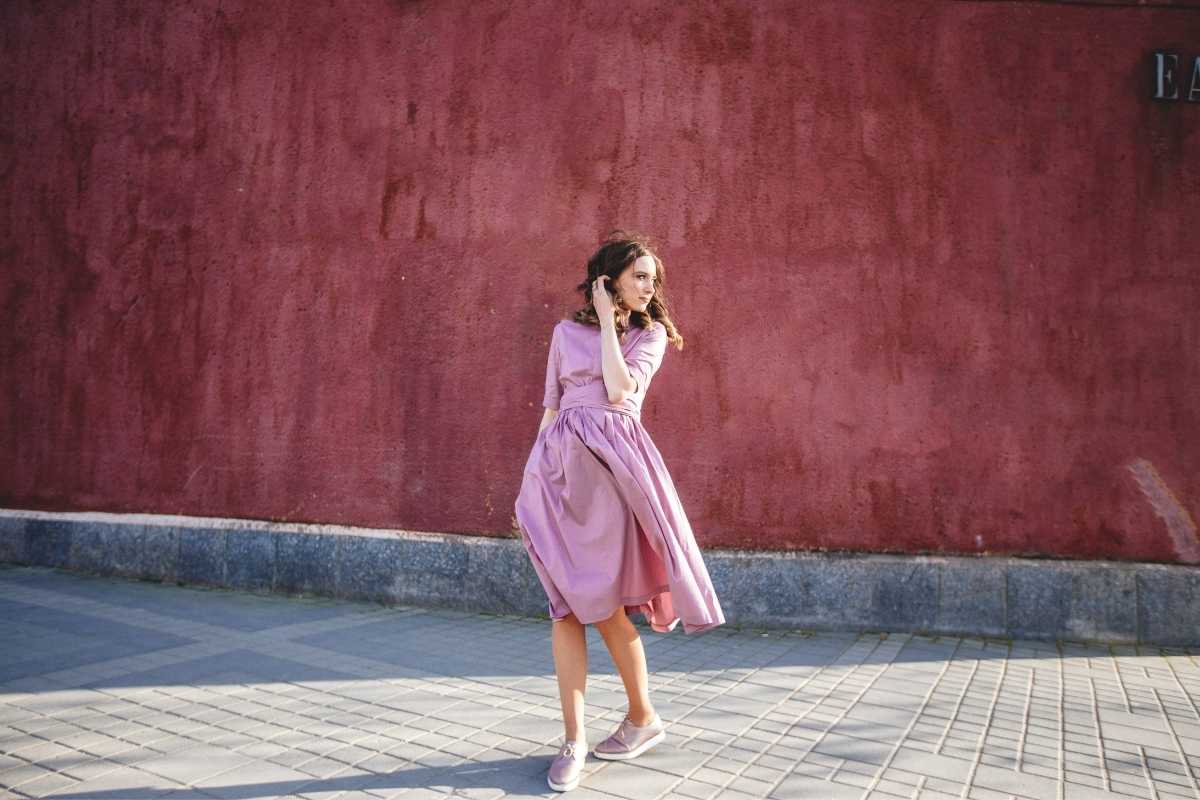
Burgundy and emerald are obvious holiday favorites, but a mauve dress offers something a little softer. Paired with silver jewelry, nude heels, or a tailored cream coat, it feels elegant without leaning too heavily into traditional Christmas colors. Velvet or satin versions work particularly well for evening performances.
Add a tailored wool coat and small earrings, and you’re ready.
Comfort depends on the cut. A slightly relaxed waist and an A-line silhouette are generally easier to sit in than a tightly fitted bodycon design.
Velvet also tends to feel substantial, which makes it particularly attractive for cold evenings. Just remember that a warm theater can make heavy fabrics less comfortable.
For anyone searching for traditional nutcracker attire, velvet is one of the strongest options. It feels festive without requiring elaborate accessories or uncomfortable formalwear.
Best for: Evening performances, holiday dates, and anyone who enjoys classic festive dressing.
2. A Satin Skirt and Soft Sweater
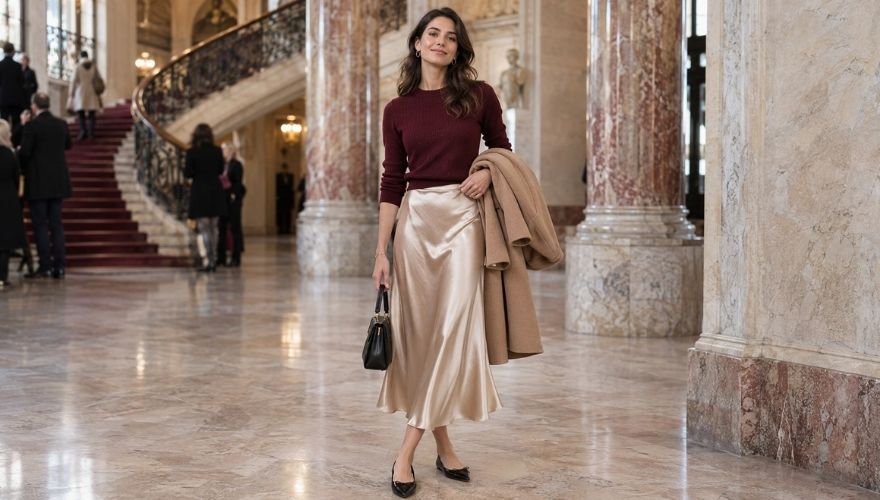
Satin skirts have a useful talent for making ordinary knitwear look more expensive.
Pair a champagne satin midi skirt with a burgundy sweater, or choose ivory satin with a fitted black knit. Add pointed flats and delicate jewelry for a polished finish.
Contrast makes this combination interesting. Smooth satin introduces movement and a subtle sheen, while the sweater keeps everything relaxed.
Fabric weight deserves a second thought here.
A fine-gauge sweater will generally sit more neatly against a satin skirt than a chunky cable-knit. Similarly, a skirt with an elasticized or forgiving waistband can make a noticeable difference during a seated performance.
For colder weather, add sheer tights and a wool coat.
Anyone trying to dress for ballet without looking overly formal will appreciate how easily this combination moves between daytime and evening settings.
Best for: Matinees, casual evening performances, and anyone who prefers elegant separates over dresses.
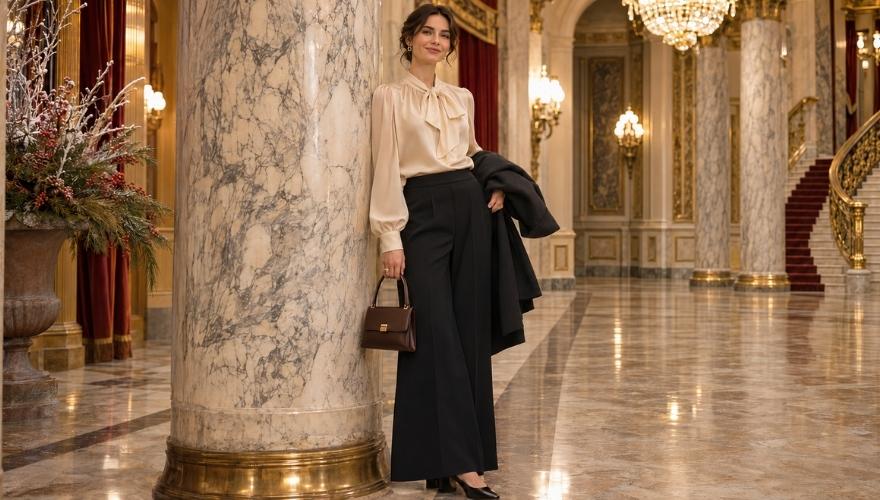
3. Tailored Trousers and a Statement Blouse
Who decided dressing up always requires a dress?
Wide-leg tailored trousers paired with a silk or satin blouse can look every bit as sophisticated as cocktail attire, particularly when the proportions are considered.
Choose trousers in black, charcoal, or chocolate brown. A blouse with a bow neckline, soft draping, or a subtle satin finish provides just enough interest.
Elegant loafers or low block heels complete the outfit.
Here’s where fit becomes especially important. Wide-leg trousers should allow comfortable movement through the hips and thighs without creating excess fabric around your feet.
For a practical test, sit down in the complete outfit for several minutes before leaving. If the waistband digs into your stomach or the blouse constantly needs rearranging, make an adjustment.
A flexible ballet dress code makes tailored trousers an entirely reasonable choice, even for evening performances. Elegant tailoring can look just as polished as a dress, provided the fabrics and fit suit the occasion.
Best for: Evening shows, dressier venues, and anyone who prefers structured clothing.
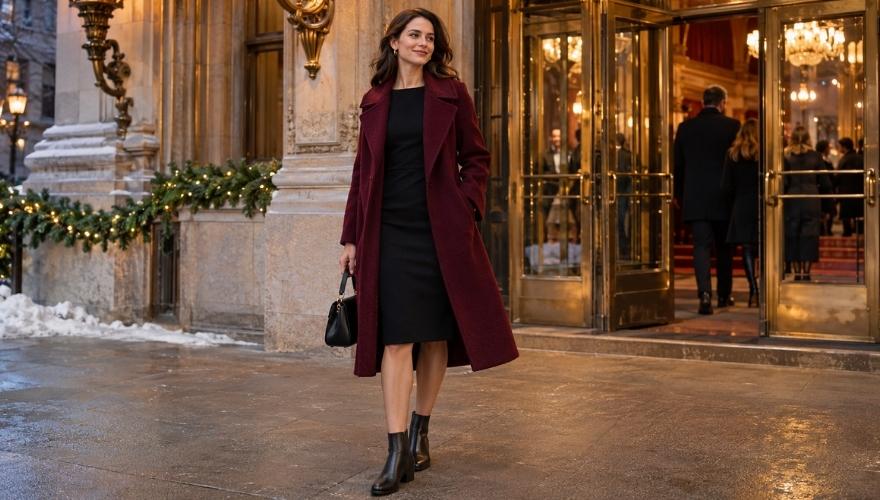
4. A Little Black Dress With a Statement Coat
Sometimes, the most sensible answer is already hanging in your closet.
A simple black dress can become an excellent Nutcracker outfit with the addition of a beautiful coat.
Burgundy wool introduces festive color, while camel creates a softer, more classic combination. A textured coat can also make an otherwise minimal outfit feel intentional.
Choose ankle boots with a low heel or comfortable pumps, depending on the weather.
One detail worth considering is the dress’s fabric. Stretchy jersey, ponte knit, or a softly structured material often works better for extended sitting than stiff, restrictive tailoring.
If you’re deciding what to wear to Nutcracker ballet performances without purchasing anything new, a little black dress is an obvious place to start.
You don’t need a completely new wardrobe simply because someone decided the evening required a little culture.
Best for: Date nights, evening performances, and readers who appreciate simple outfits with polished details.
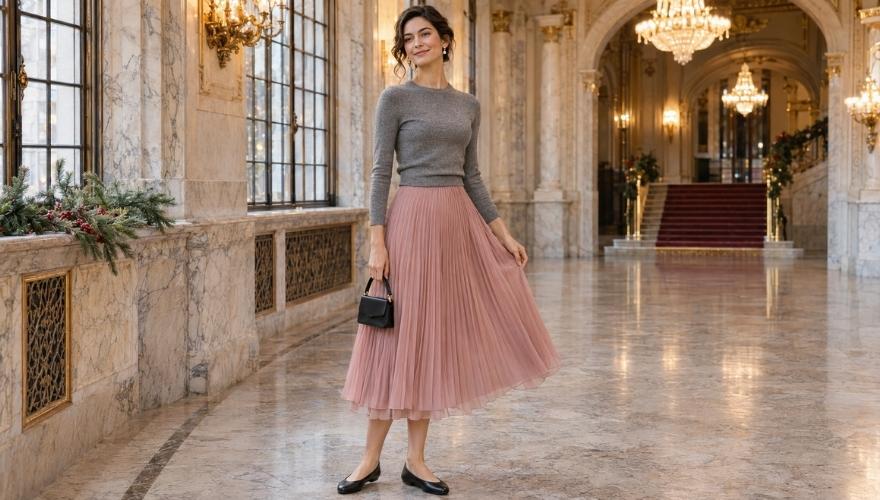
5. A Tulle or Pleated Midi Skirt With Ballet Flats
Ballet-inspired fashion feels particularly appropriate when you’re actually going to the ballet.
A December 2025 report detailed how New York City Ballet’s production of The Nutcracker requires more than 150 costumes, all prepared with the help of an 18-person costume department.
Fortunately, borrowing a little inspiration for your own outfit is considerably simpler. A softly pleated skirt or a pair of ballet flats offers a subtle reference without making you look like an extra in the performance.
A soft tulle or pleated midi skirt paired with a fitted knit top creates a romantic silhouette without requiring anything particularly complicated.
Keep the proportions balanced. Fuller skirts generally look more refined with streamlined tops, while simple ballet flats reinforce the inspiration.
Black, dusty pink, champagne, and soft gray all work beautifully.
Restraint is useful, though. Pairing tulle with ribbons, oversized bows, and multiple ballet-inspired accessories can make the outfit feel more like a costume.
Volume also matters. A moderately full skirt is much easier to manage in a narrow theater seat than several layers of dramatic tulle.
Ballet-inspired nutcracker attire works particularly well when the reference is subtle. Think soft movement and elegant proportions rather than an exact imitation of a dancer’s costume.
Ballet-inspired dressing makes sense at the ballet. Just stop before the outfit starts suggesting you’re auditioning.
Best for: Holiday matinees, special occasions, and anyone attracted to the balletcore aesthetic.
What to Consider Before Choosing Your Nutcracker Outfit
Looking appropriate is only half the equation. A thoughtfully chosen outfit should also handle the practical realities of a theater visit.
For some perspective, New York City Ballet’s 2026 production of George Balanchine’s The Nutcracker is listed with a running time of approximately two hours. That’s a considerable stretch to spend in uncomfortable clothing.
When deciding what to wear to Nutcracker ballet performances, four practical details deserve attention.
| Consideration | What to Choose | What to Keep in Mind |
| Shoes | Ballet flats, block heels, or loafers. | Consider walking distances and winter sidewalks. |
| Layers | Wool coat and lightweight layers. | Dress for cold weather and heated theaters. |
| Fit | Flexible fabrics and comfortable waistbands. | Avoid tight clothing and skirts that ride up. |
| Accessories | Small bag, pearl earrings, or velvet bow. | Keep accessories simple and practical. |
Bag size deserves more thought than it usually gets. Lincoln Center generally allows small bags that fit beneath theater seats, while larger belongings may need to be checked, depending on the venue.
A compact crossbody or small shoulder bag is usually the easier option. Nobody wants to spend the first act negotiating legroom with an oversized handbag.
One overlooked detail is how your clothing behaves while seated.
A dramatic coat might look beautiful in the lobby, but it needs somewhere to go during the performance. Likewise, oversized sleeves, bulky skirts, and large handbags can compete for space with neighboring audience members.
Checking the venue’s coat-check and bag policies beforehand can save some unnecessary juggling.
Although the ballet dress code at most venues gives audiences considerable freedom, practical considerations should influence your final choice.
Ultimately, the most successful Nutcracker attire balances three things: the setting, your personal style, and the amount of time you’ll actually spend wearing it.
Dress for the Occasion, Not Just the Photograph
Choosing what to wear to Nutcracker ballet performances shouldn’t require an entirely new outfit or an uncomfortable attempt at elegance.
A velvet dress, satin skirt, tailored trousers, or beautiful sweater can all feel appropriate with thoughtful styling. Personal taste matters more than following an unofficial ballet dress code, particularly when most theaters encourage comfortable clothing.
Start with pieces you already enjoy wearing, add one festive detail, and consider the practical side of the evening.
After all, the dancers have spent months perfecting their movements. You should at least be able to make it through the performance without constantly thinking about yours.