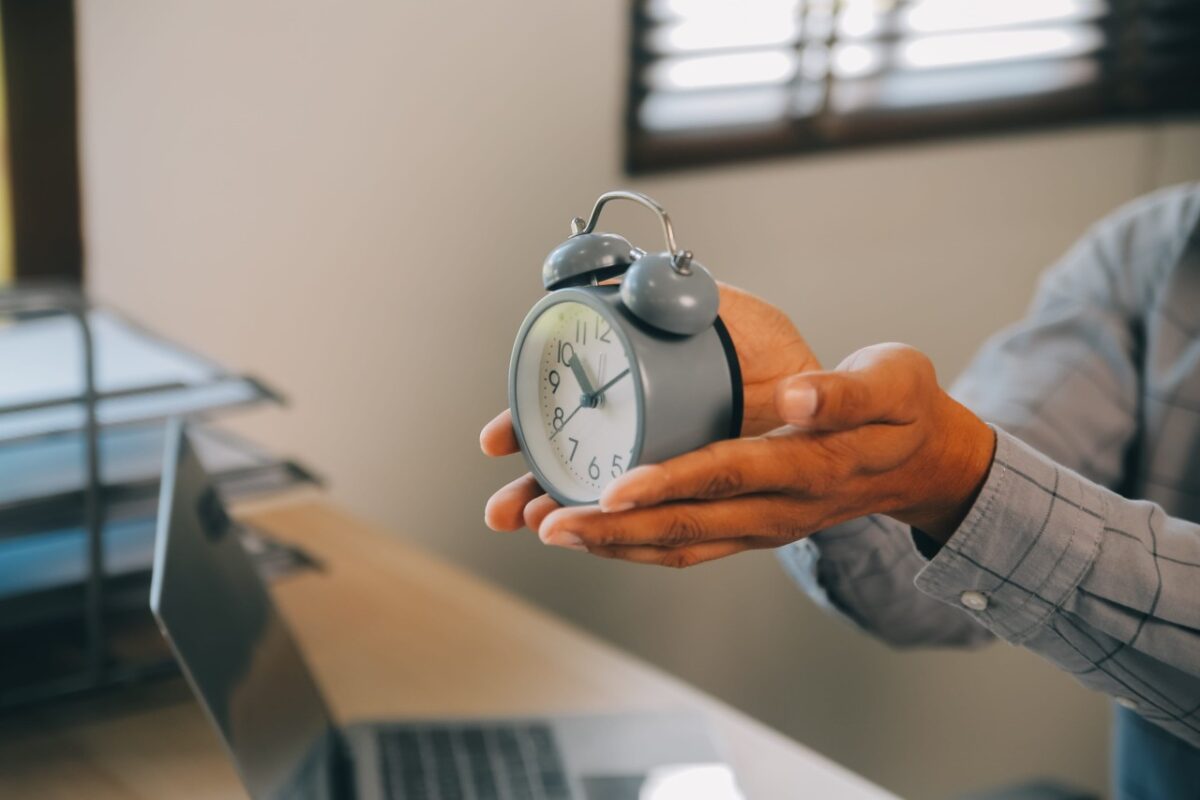

Unfortunately, apples aren’t particularly interested in being decorative.
Leave them sitting at room temperature, and that satisfying crunch gradually gives way to softer, less juicy flesh.
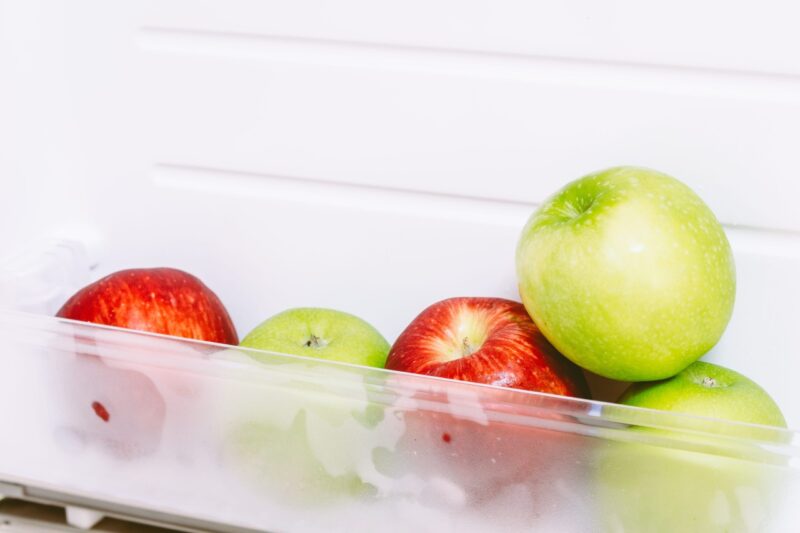
Refrigeration slows that process considerably, allowing properly stored apples to stay crisp for about a month, sometimes even longer.
In this article
The Fruit Bowl Looks Nice, but the Fridge Does a Better Job
Apples don’t stop changing once they’re picked.
Even after harvesting, they continue to respire, produce ethylene gas, and undergo the biological changes associated with ripening.
Ethylene acts as a natural plant hormone, encouraging changes that eventually soften the fruit’s cell walls. As moisture escapes and the internal structure deteriorates, an apple gradually loses its firm, juicy bite.
Cooler temperatures slow these processes, weather you have apples, pears or pumpkins.
According to the University of Minnesota, apples store best at approximately 33°F to 38°F, with humidity around 85%. Ordinary household refrigerators generally provide suitable temperatures, making them considerably better storage locations than kitchen counters.
How much longer can refrigeration keep apples fresh?
One refrigerator manufacturer’s storage estimates put the difference at approximately 17 days at room temperature versus 40 days in a standard refrigerator. That’s more than twice as long, although actual results depend on the fruit’s condition and storage environment.
A month is therefore a reasonable expectation for properly refrigerated apples, not an expiration date or a promise that every variety will cooperate.
A Little Humidity Makes a Surprisingly Big Difference
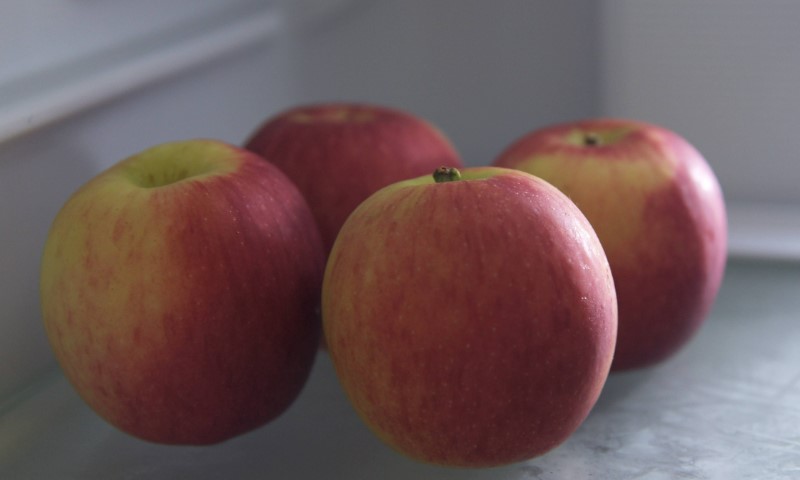
Cold temperatures are only half the equation.
Refrigerators can have relatively dry air, encouraging apples to lose moisture through their skin. As that happens, their firm texture gradually deteriorates, even when the fruit is still perfectly edible.
Humidity helps prevent that dehydration, which explains why the refrigerator’s crisper drawer is usually the best location.
For better results, keep apples in a perforated produce bag or an ordinary plastic bag left slightly open. Either arrangement helps retain moisture while allowing air circulation.
An October 2026 series of storage tests compared Granny Smith, Honeycrisp, and Cripps Pink apples kept under different conditions.
After three weeks, refrigerated apples generally looked and tasted fresher than those left at room temperature. Honeycrisp apples placed directly on an open refrigerator shelf showed more noticeable wrinkling than those protected by bags or crisper storage.
Another useful detail concerns washing.
Apples naturally develop a thin, protective wax coating that limits moisture loss. Washing before storage can disturb that protection and introduce additional surface moisture.
Keep apples unwashed until you’re ready to eat them, and avoid stacking them tightly enough to cause bruising.
Consider a typical grocery trip involving six apples. If two are destined for tomorrow’s lunches, leaving them on the counter is reasonable. Putting the other four, unwashed and loosely bagged, into the crisper gives them a considerably better chance of retaining their crunch over the following weeks.
Your Apple May Have Been Sleeping for Months Already
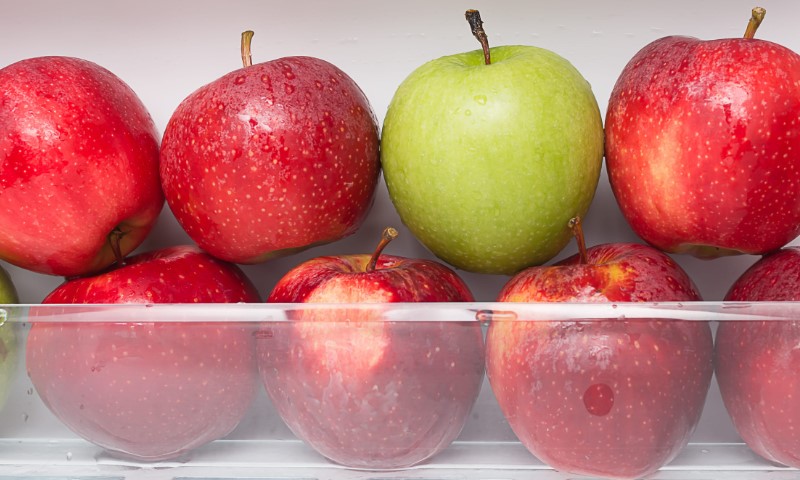
Here’s something worth remembering during your next grocery trip: A crisp supermarket apple isn’t necessarily a recently harvested apple.
Some apples spend months in specialized commercial storage before reaching supermarket shelves.
Commercial facilities use a technology called controlled-atmosphere storage, which carefully regulates temperature, humidity, oxygen, and carbon dioxide levels.
Oxygen is particularly important because apples continue consuming it as they respire.
Reducing its availability slows their metabolism and helps delay ripening.
In some controlled-atmosphere facilities, oxygen concentrations are lowered to approximately 2%, considerably less than the roughly 21% found in ordinary air.
Commercial storage has become so effective that a crisp apple purchased in spring may have been harvested the previous autumn.
According to USApple’s storage industry data, roughly 40% of the annual American apple crop is marketed by December 1 of its harvest year. Much of the other 60% reaches consumers during the following eight months.
Such technology helps explain why supermarket apple displays look remarkably consistent throughout the year, even though harvesting is seasonal.
Your refrigerator operates on a similar principle by slowing deterioration through cooler temperatures. It simply lacks the sophisticated atmospheric controls that allow commercial facilities to preserve fruit for months.
Not Every Apple Keeps Its Crunch Equally Well
View this post on Instagram
Variety matters almost as much as storage conditions.
Firmer, denser apples such as Fuji, Granny Smith, and Cripps Pink generally tolerate extended refrigeration better than softer varieties.
Honeycrisp presents an interesting exception. Despite its famously crisp, juicy flesh, its relatively thin skin makes it more vulnerable to moisture loss. Certain cold-storage conditions can also cause internal damage.
Initial freshness matters, too. An apple already approaching the end of its storage life won’t suddenly gain another month simply because someone puts it in the refrigerator.
Check stored apples occasionally, removing any showing mold, significant bruising, or decay. Keep them away from ethylene-sensitive produce, including leafy greens, since apples release gas that can accelerate deterioration in neighboring foods.
For apples you expect to eat within five to seven days, a countertop fruit bowl is generally fine.
Anything intended for later deserves refrigerator space.
After all, nobody needs to reorganize an entire kitchen for three apples. But when you’ve purchased a whole bag with ambitious snacking plans, the crisper drawer makes considerably more sense.
Your fruit bowl can keep its decorative duties. Your apples will be happier somewhere cooler.